
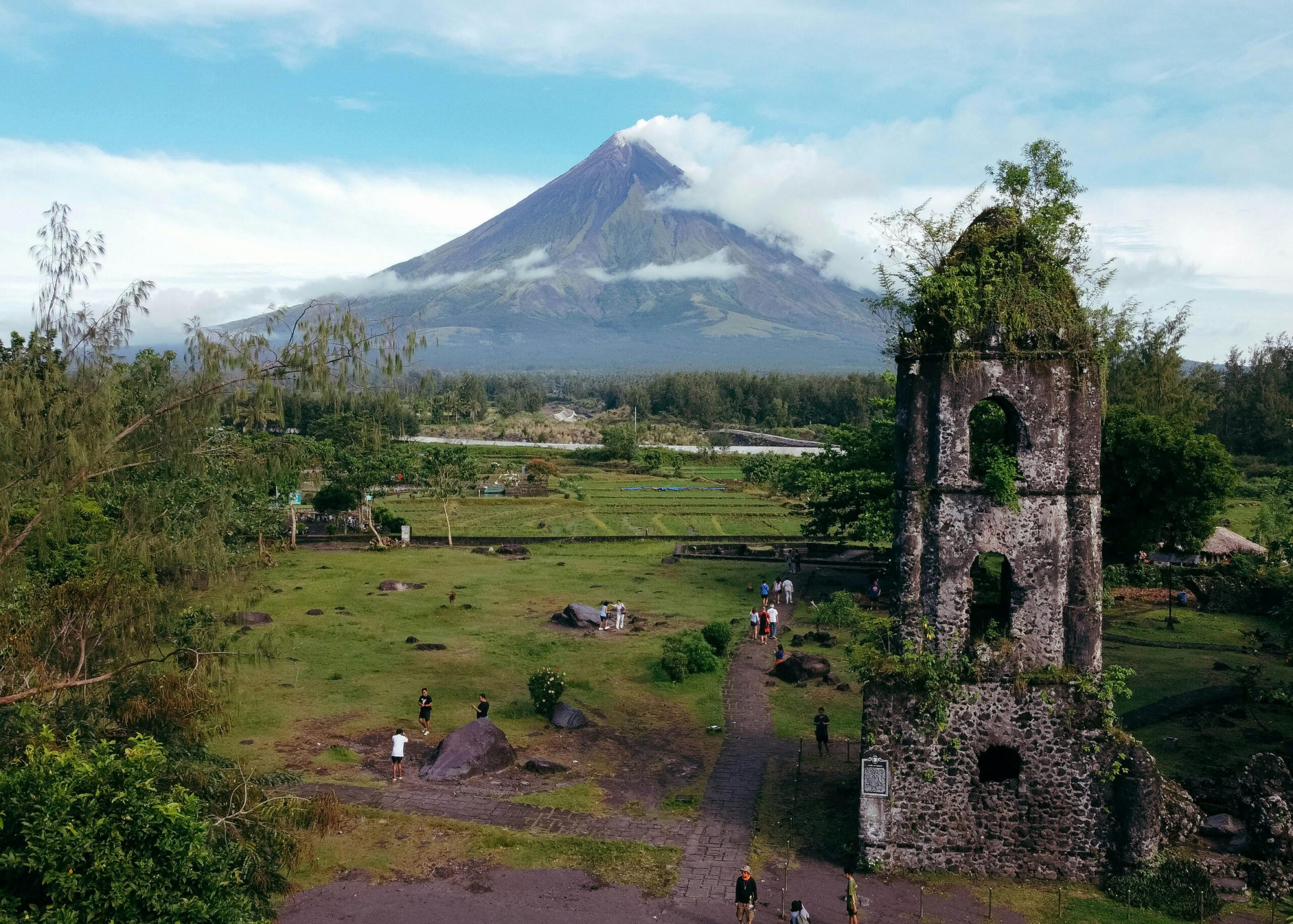
On February 1, 1814, the majestic Mayon Volcano revealed its most terrifying side. Known for its near-perfect cone, the volcano has long been admired, but on that fateful day, it told a different story. Without warning, it erupted with overwhelming sending rivers of fire, ash, and mud cascading down its slopes.
In the nearby town of Cagsawa, panic spread quickly. Around 1,200 residents fled to the sturdy stone walls of Cagsawa Church, believing it would shield them from the chaos outside. For a moment, it must have felt like the safest place in the world. But nature had other plans. Pyroclastic flows, searing clouds of gas and debris along with fast-moving lahar engulfed the church, burying it and everyone inside. What was meant to be a sanctuary became a silent tomb.
From the ruins of that tragedy, only one structure remained standing, the church’s belfry. Weathered but unyielding, it has stood for over two centuries, a haunting yet powerful reminder of both loss and resilience. Today, it draws visitors not just for its history, but for the emotions it stirs, a place where beauty and tragedy meet.
What once was a site of devastation is now the vibrant Cagsawa Ruins Park. Carefully preserved and managed by the local government of Daraga, the park has become one of Albay’s most visited attractions. Here, history blends seamlessly with breathtaking scenery. The iconic view of the lone belfry set against the dramatic backdrop of Mayon Volcano is nothing short of mesmerizing—one of those rare sights that feels almost unreal, like a postcard come to life.
Walking around the park, you’ll notice remnants of the past scattered across the grounds—chunks of volcanic rock that tell their own quiet stories. But there’s also a lively, welcoming energy in the area today. Just outside the ruins, a small marketplace buzzes with activity. Local vendors proudly display handcrafted goods made from abaca—woven bags, mats, and souvenirs that reflect the region’s rich culture and craftsmanship. Brightly colored flowers and delicate orchids add a refreshing contrast to the somber history of the site.
Don’t be surprised if young locals approach you with a smile, offering printed photos of Mayon or even a quick storytelling tour. Many of them have grown up hearing these stories and share them with genuine enthusiasm. While their guiding is informal, it often adds a personal, heartfelt layer to the visit. A small tip is always appreciated, though never required.
If you’re planning to visit, getting there is fairly straightforward. From Legazpi City, the ruins are just about a 20-minute drive. You can hire a tricycle, take a jeepney bound for Daraga, or book a local tour for a more convenient experience. The roads are accessible, and the site is well-signposted, making it easy even for first-time travelers.
A few things to keep in mind: mornings or late afternoons offer the best views of Mayon, as clouds tend to gather around its peak later in the day. Bring water, wear light clothing, and don’t forget sun protection—it can get quite hot in the open grounds. Also, take your time. This isn’t just a place for photos; it’s a place for reflection.
Today, Cagsawa stands not just as a reminder of a tragic past, but as a symbol of endurance and renewal. Through preservation efforts and ongoing restoration—especially after recent typhoons—the local government continues to protect its legacy. And as visitors walk its grounds, they become part of its story too, carrying with them a deeper appreciation of both nature’s power and the strength of the human spirit.